Choosing the right kitten food
Proper kitten food is important for the health of a growing cat, and a cat under one year old needs food specially designed for kittens. The first year of life is a delicate period of growth for a kitten, as it lays the foundation for a healthy adult life.
If you are considering getting a kitten, familiarize yourself with cat care and the needs of a kitten well in advance.
Read this article for tips on choosing the right kitten food and answers to the most frequently asked questions about feeding a kitten.
In this article, we will cover:
What is the best kitten food?
Mother cat’s milk is primary nourishment for kittens up to 5–6 weeks of age, though a kitten starts tasting solid food around 3 weeks of age. The mother gradually weans the kittens, and kittens are ready for adoption at 14 weeks of age.
The cat is an obligate carnivore, whose body hardly utilizes carbohydrates. For a growing kitten, meaty kitten food is essential, with proteins specifically being animal proteins. A growing cat also needs fats as well as a balanced intake of calcium and phosphorus.
The cat’s body requires certain essential amino acids, such as taurine and arginine, which it can only get from meat. Dog food is not suitable for cats, as the content of animal-based protein in it is lower than in cat foods.
Make sure your kitten gets enough fluids. Cats naturally have a weak sense of thirst, which is why they should get most of the water they need from their food. Read about how you can support your cat’s hydration.
Tips for feeding a kitten
Choose high-quality kitten food. You should focus on high-quality complete kitten foods when feeding a kitten to ensure your cat gets enough energy and the nutrients needed for healthy growth. Check our criteria for high-quality cat food.
Wet cat food as the main meal. We recommend that most of the kitten’s daily food is wet kitten food, which meets the cat’s natural nutritional needs, and your cat will also get fluids from its food.
At least half of the food designed for kittens. Ensure at least half of your kitten’s diet consists of food designed especially for kittens. If half of your kitten’s meals are specially designed for them, the rest can include adult cat food, such as PrimaCat Classic complete wet foods.
PrimaCat wet food for kittens has been specially developed to support the growth of kittens aged 1 to 12 months. This meaty complete food features a 50/50 blend of gravy and delicious meat strips, and is enriched with taurine, an amino acid that is essential for cats.
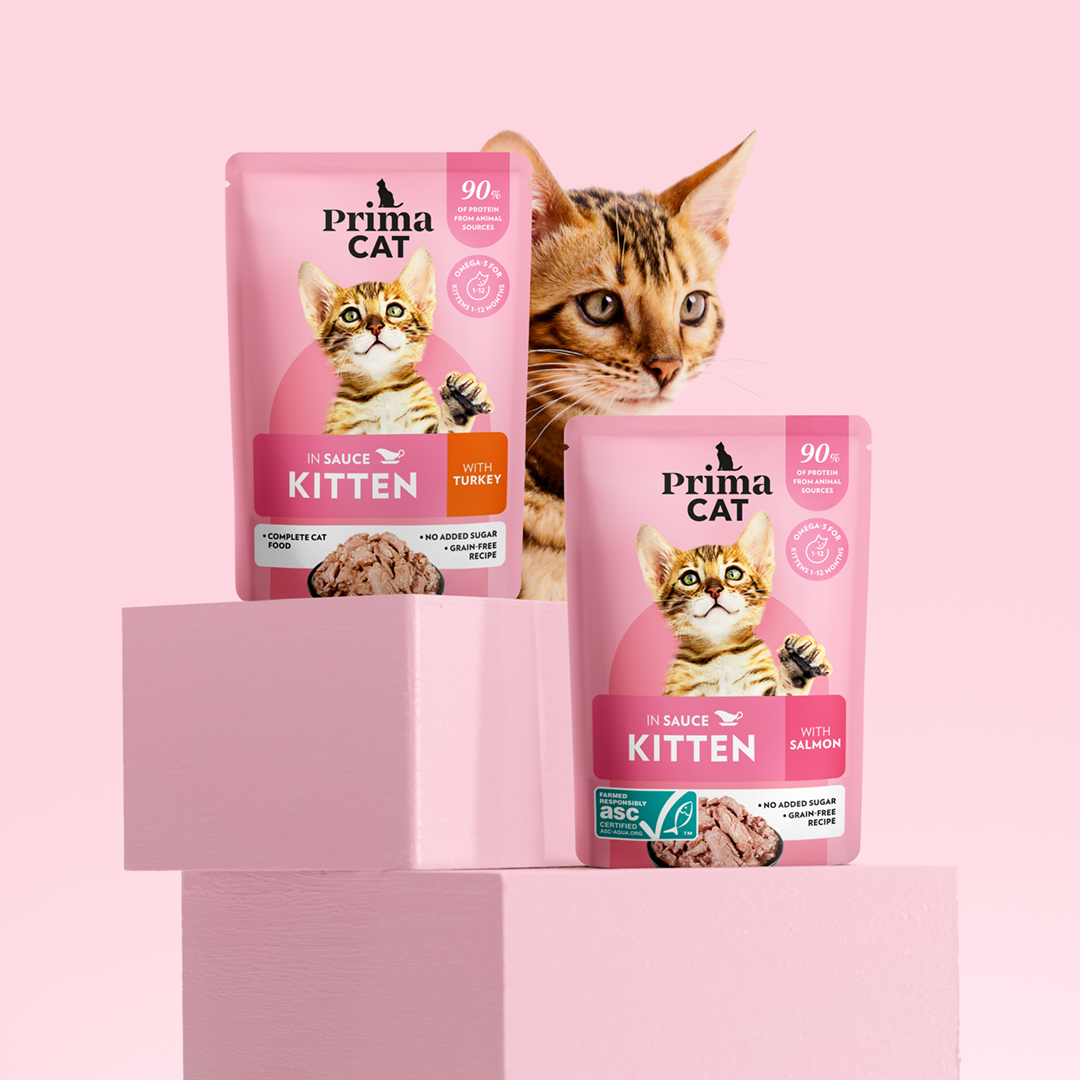
PrimaCat Turkey in gravy for kittens wet food contains essential omega-3 fatty acids that support the development of the kitten’s nervous system and vision, providing excellent foundation for healthy growth and development of the cat. Also available in a salmon in gravy flavour.
If you want to give your kitten kibble in addition to wet food, half of the cat’s daily food can be PrimaCat Chicken for kittens and nursing cats dry food.
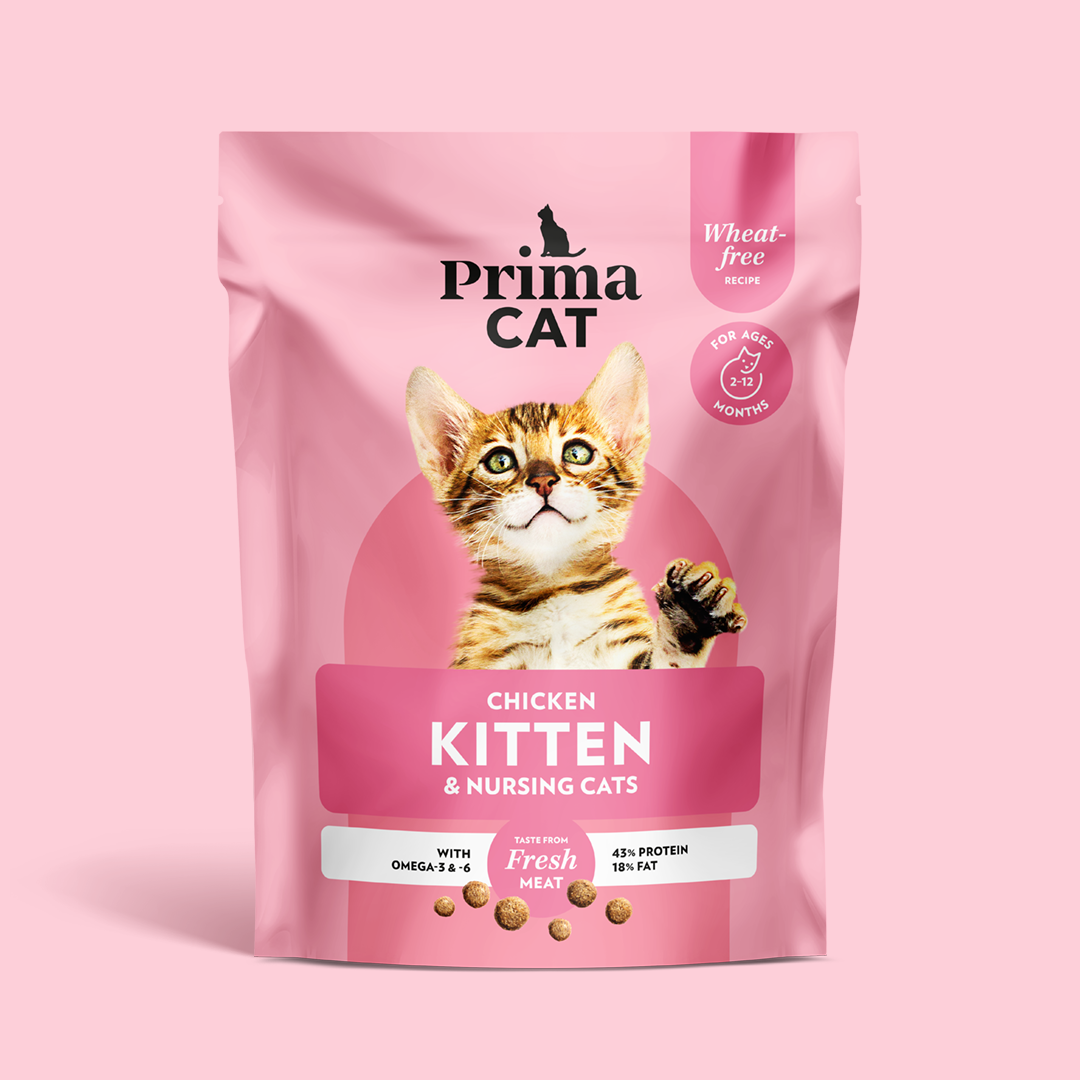
The carefully formulated nutritional content of the PrimaCat Chicken for kittens and nursing cats dry food helps to secure the growth of the kitten’s muscles and bones and supports the kitten’s immune system. This wheat-free and corn-free kibble is also ideal for nursing cats to give them an extra boost during the heavy gestation and lactation period.
Pay attention to your cat’s size. For kittens expected to grow big, lean towards products made for kittens to make sure your cat gets all the essential nutrients it needs to grow.
Introduce new flavours and mix things up. You can sometimes give your kitten supplementary foods like PrimaCat Soup and Fillets wet foods, or raw food like fish and different meats. But remember to make sure the most of the cat’s daily food is complete cat food.
Always make changes to your kitten’s diet slowly, as a sudden change in the diet can easily cause digestive problems.
Keep kitten food freely available or serve small meals throughout the day. Kittens should eat multiple times daily, and cats usually eat only when they are hungry.
No added sugar for cats. Keep the kitten’s feeding healthy. Check the kitten food packaging to ensure the food you are giving does not contain added sugars. Added sugar can cause health problems for cats, and getting used to it may make it difficult to switch the diet to a healthier option later.
Get your kitten used to different foods
Give your kitten foods that have different tastes and textures. This way the cat gets used to variety of foods. Feeding a cat as an adult can be easier if the cat has already learnt to eat both dry and wet food and different flavours as a kitten.
A cat’s pickiness is often caused by the cat getting used to a certain type of food. Moreover, cats are typically very suspicious of new foods. Getting a fussy cat used to a new food as an adult can be difficult, but it is not impossible.
How much does a kitten eat?
The best way to find the right amount of food for your kitten is through trial and error. Feeding tables on kitten food packages provide a guideline to estimate the appropriate amount of food. Monitor your cat’s condition to notice if it starts to gain excess weight.
Kittens usually move and play a lot. An adult cat’s spontaneous activity often decreases, which is why it is important to offer various stimuli, especially for an adult indoor cat.
How long does a cat eat kitten food?
A kitten’s growth continues until about 1 year of age. Even if a cat may look fully grown before reaching one year, it needs nutrition suitable for its age until adulthood. The food for a one-year-old cat can gradually be switched entirely to adult cat food. A cat that grows larger may need kitten food for a longer period. Check out the instructions on how to switch cat food.
PrimaCat cat foods are developed to meet the natural nutritional needs of cats. You can conveniently find our products in grocery stores. See our retailers.